The right port depends on your island, not on which one is most famous. Head to Rafina for Mykonos, Tinos or Andros, because it sits closest to Athens Airport and the crossings are shorter. Use Piraeus for Santorini, Paros, Naxos, Crete, the Dodecanese and the Saronic Gulf islands. Lavrio is the small third option, useful mainly for Kea and Kythnos. This guide matches each island to its port and shows how to reach all three from the arrivals hall.
Booking a ferry from the wrong port is a common and costly slip. A traveller landing at the airport who books a Piraeus sailing to Mykonos can spend an extra hour crossing the city, when Rafina was barely 30 minutes away. Match the port to your island first, then book the crossing.
Which port is closest to Athens Airport?
Rafina is the nearest of the three, about 25 to 40 minutes by road from the terminal and roughly 15 to 20 km away, depending on traffic. Lavrio lies farther out to the southeast, around 40 km and 40 minutes from the airport. Piraeus, the largest port and the one closest to the city centre, is the farthest from the airport, at roughly 45 to 60 minutes and around 50 km, because the trip crosses the whole metropolitan area.
That gap matters most when your connection is tight. Land in the afternoon and need an evening ferry, and Rafina or Lavrio buy you a margin that Piraeus does not. For a morning flight followed by a midday sailing, the shorter hop can be the difference between making the boat and watching it pull away from the quay.
Which islands sail from Rafina?
Rafina serves the northern Cyclades, with daily ferries to Mykonos, Tinos and Andros through the season, plus seasonal fast routes that reach Naxos and Paros. Crossing times run shorter than from Piraeus: a fast ferry reaches Mykonos in about 2 hours 20 minutes and Tinos or Andros in around 2 hours.
Andros is the clearest case, since it is reached almost only from Rafina, so there is no real decision to make. Mykonos and Tinos sail from either port, but the airport proximity tips the balance toward Rafina for most arriving travellers. The port is small enough that finding your gate takes minutes, not the long walk a big terminal demands.
In July and August the Rafina routes to Mykonos and Tinos fill quickly, so book the crossing before you fly rather than on arrival. The port also handles fewer daily departures than Piraeus, which means a missed boat can cost you hours rather than minutes. The upside is the calm scale of the place: with one main building and a short quay, you move from the bus stop to your gate without the long waterfront walk that Piraeus demands.
Which islands sail from Piraeus?
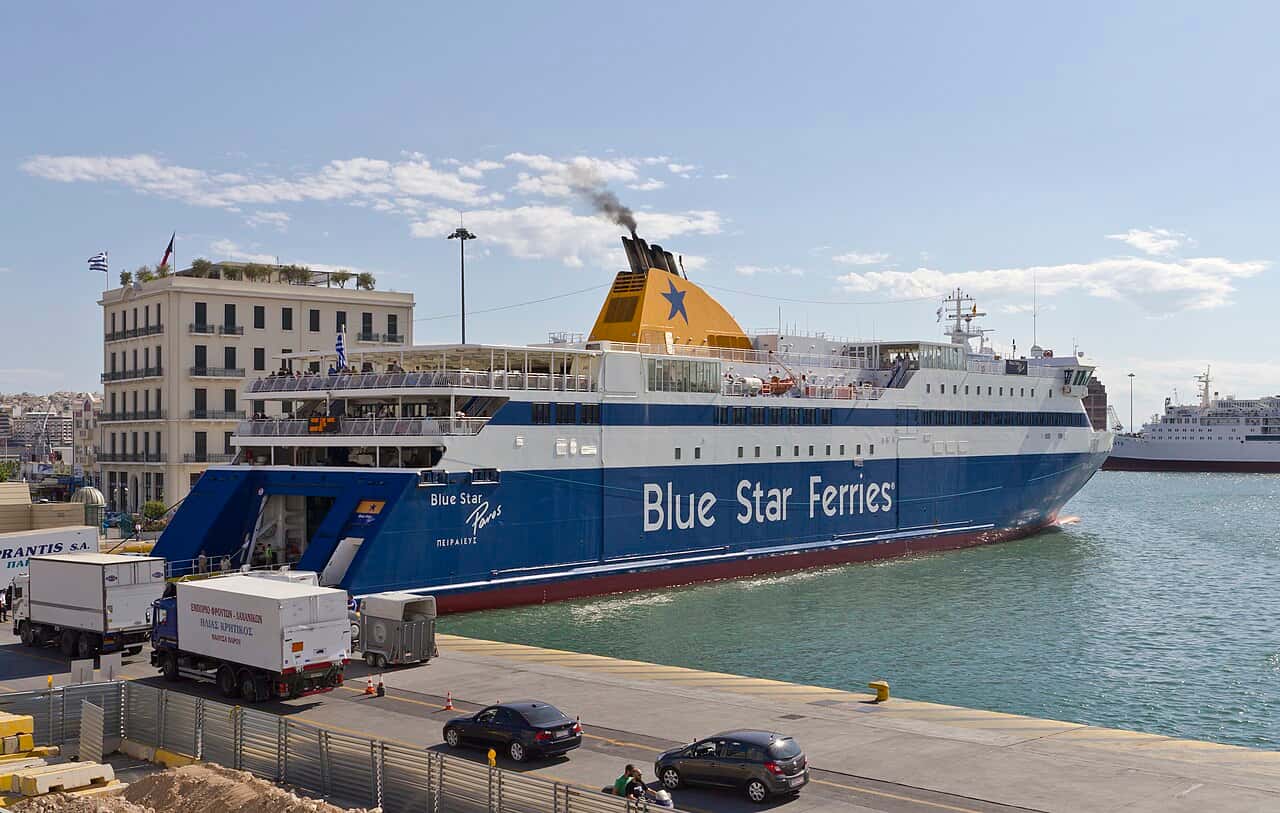
Piraeus is the default for nearly everything else. As the busiest passenger port in Europe, it links the mainland to Santorini, Paros, Naxos, Milos and the rest of the central Cyclades, to Crete, to Rhodes and the wider Dodecanese, to the northern Aegean islands such as Lesvos, Chios and Samos, and to the Saronic Gulf escapes of Aegina, Hydra and Poros.
Crossings here run longer because the islands are farther: Piraeus to Santorini takes about 5 hours by fast boat and 7 to 8 hours by conventional ferry, while Crete is an overnight haul of 6 to 9 hours. If your island is not on the short Rafina or Lavrio lists, assume Piraeus. The trade-off is the longer transfer from the airport and a large port where ferry gates, numbered E1 to E12, spread along a wide waterfront, so leave time to find yours after you arrive.
What about Lavrio port?
Lavrio is the quiet third port, on the southeast tip of Attica. It mainly serves Kea (Tzia) and Kythnos, the closest Cyclades to Athens, along with a handful of seasonal routes to the western Cyclades and the northern Aegean. The crossing to Kea is short, about an hour, which makes Lavrio a genuine weekend gateway rather than a fallback.
It is the least connected of the three by public transport, so the airport leg needs planning. For most island travellers Lavrio never enters the picture, but for its handful of destinations it is the right answer, and often the only one. Athens Airport does not yet have a dedicated Lavrio transfer page, so confirm the current KTEL bus times before you rely on them.
How do you get from the airport to each port?
For Piraeus, you have three public choices. Metro Line 3 costs €9 and runs directly from the airport station to the port, with no change of train; our airport Metro guide has the timetable. The X96 express bus costs €5.50 and leaves from outside arrivals. A taxi to Piraeus runs on the meter rather than the airport flat fare, since the port sits outside the central-Athens flat-rate zone, so expect roughly €50 to €58 by day and €68 to €75 at night, tolls included. The metro takes about 65 minutes, while the X96 is slower at around 90 minutes in traffic; a taxi is quicker outside rush hour. Our guide on getting from the airport to Piraeus port compares all three, and the airport bus guide covers the X96 timetable in detail.
For Rafina, a KTEL regional bus runs from the airport in about 25 to 30 minutes, with a taxi at around €45. See our airport to Rafina port guide for the departure point and current times. Lavrio is reached by a separate KTEL line or by taxi. When your sailing time is fixed and the margin is thin, a car booked through GetTransfer takes you straight to the right port at the hour you set, which removes the risk of a missed bus connection before a ferry you have already paid for.
A quick way to choose your port
Start from the island rather than the port. If you are bound for Mykonos, Tinos or Andros, plan on Rafina. Kea and Kythnos point you to Lavrio. Most other islands, from Santorini down to Crete and across to the Dodecanese, sail from Piraeus. Once the port is set, check the airport-to-port time against your ferry departure and add a buffer for traffic.
As a rule of thumb, leave at least 3 hours between your flight landing and a ferry from Piraeus, and around 2 hours for Rafina or Lavrio. That covers baggage reclaim and the road transfer, plus the walk to a ferry gate, with room for the congestion that builds on the airport road in summer. A flight landing at 11:00 am pairs comfortably with a 2:30 pm Piraeus sailing, while a 1:00 pm departure leaves almost no slack once a bag runs late. If your arrival and your only ferry of the day sit closer than these windows, a private transfer that waits for your flight is a safer call than a fixed bus.
One last check saves the most grief. Confirm on your ticket which port your specific ferry leaves from, because a few popular islands run sailings from more than one, and the port name printed on the booking is the one that counts. The official Athens International Airport site lists the current transfer options to each port, and it is the cleanest place to verify before you travel.
Prefer a door-to-door ride to the harbour? Compare fares in our airport taxi guide before you decide.